It was one of those ceasefires that punctuated the early months of the civil war in Lebanon. Narrator Richard Devine and his family have been staying with their American journalist friend, Lawrence Anderson, in a safe area of Beirut, but now the city seems quiet again, they’re ready to leave. Lawrence won’t hear of it:
— You think I’m gonna drive you out of here so you can get shot by the nearest trigger-happy hero?
— It’s not a question of you driving us out. We just feel we’ve been imposing on you for too long.
— Imposing on me? You’re not imposing on me. God, you English! Try to get it into your dumb skull that I invited you here. I wouldn’t have asked you if I didn’t want you to stay.
— But we’ve been here for weeks.
—Twenty-nine days. That’s twenty-nine days when you might have been killed up at your place. Don’t you understand that having you here makes me feel virtuous?
— It’s been quiet for days.
— But still dangerous.
— I thought you said it was finished?
— It is, in the military sense. That doesn’t stop it being dangerous.
— How?
— Look Richard, you really want to go back to your place?
— Yes.
— All right, I’ll take you up there tomorrow, so you can see for yourself. But you won’t like it. Just you. Not Claire.
By now, I was so much in Lawrence’s power that I wouldn’t even have considered going there by myself, or without his permission. Our VW had been parked outside ever since we arrived, because the only place it was safe to go was the short walk to the school and Hamra. Lawrence said so.
And yet the drive back to our apartment seemed no different from before. In West Beirut there was the usual late-afternoon traffic, the usual commotion, the never-ending procession of car-horns. The same people sat in the same cafés, loitered outside the same cinemas, stepped into the same boutiques. Nobody seemed to have noticed there was a war on; nothing was slower or quieter or more sinister. Perhaps the city had simply accustomed itself to crisis. None of the buildings seemed to be damaged. There were no barricades, at least not until our street, where the sandbags were piled up around our block as if they’d become an integral part of the building.
— Where are the rivers of blood?
— I never promised you blood.
— Well, the place isn’t exactly devastated, is it?
— You want a piece of the action, huh?
— I can’t help thinking that maybe you and the BBC are just making the whole thing up.
— Richard, with your imagination you should be a journalist. Really. You’re a natural sceptic.
— But it doesn’t look so bad, does it?
—Just wait.
We went up to the apartment, but my key wouldn’t open the door.
— This is the seventh floor, isn’t it?
— Yup. Do you know the neighbours?
— Never met them. They must have put a new lock on. Just as well. The old one was always a struggle.
— Where does the concierge live?
— Downstairs.
Abu Riyad was sitting at his table, sipping tea. He made no move to greet us.
— Marhaba.
He looked up vacantly and muttered a response.
— Marhabtayn.
He went back to his drinking, slurping the tea noisily through his gums, looking past us as if we weren’t there. I showed him the key, twisted it, and shook my head.
— I want to go in my house. In. Key no good. Understand? Where is key? Wayn?
He shrugged, snorted, and wiped a grimy grey cuff across his nose.
— The key? Wayn?
I waggled the key in front of his face. Suddenly he roared at us, spewing out words with all the evil and spite that a sick old man could muster. Bile oozed and wheezed its way up out of his rotten innards. Finally he was overcome by a spasm of coughing, and Lawrence took advantage of the noisy lull to interpret.
— He says he doesn’t know you, he couldn’t give a shit about your key, and he wishes you would just fuck off.
— The old bastard. Where’s Moussa. Wayn Moussa?
— Mish mawjood.
— He says he’s not here.
We glared at each other. My frustration and his diseases rendered us both speechless, but I could tell he was gathering his strength for another attack.
— Is there anything important up there — jewellery or valuables?
— That’s not the point. Wayn Moussa?
As the old man let loose another volley I made a grab for his scrawny neck. But Lawrence was faster. He pulled me back and started hustling me away. One of the site-workers, squint-eyed and dangerously unshaven, loomed up behind Abu Riyad, and the argument was over. I let Lawrence lead me back to the car. A spit followed us; Lawrence gripped my arm tighter.
— D’you wanna end up lining a sandbag?
— He’s got no right.
— He’s got every right.
— But what about all our things?
— They don’t matter.
As we drove off, my mind was racing with revenge. Take him to court? Not a chance. Breaking in? How? No, it needed real revenge. Something the old goat would never forget. Trampling all the dust out of his body. Setting fire to his table. Poisoning his tea. Yes — that’s it. As he sucks it in and swills it round his furry mouth, it tastes sweeter than ever. Good. It takes an old brown tooth with it. It begins to gnaw at his throat and his stomach. He’s thirsty. He takes more. It attacks the shrivelled lungs and the sunken heart. He falls sideways out of his chair and perishes in a black pool of spleen. Disgusting!
I was delighted with the villainous, ludicrous idea. It served him right. The stupid little ragbag, pretending not to recognise me, thinking he could outsmart me. And for what? Yes, for what? A few clothes, a few books, a chair. It began to seem funny. We were absurd, both of us. He was depriving me of the right to live in one of the most dangerous areas in town. Who wanted to live there? He might even be keeping me away for my own good. Although I doubted it. Anyway, now I’d reduced him to a puddle, I felt better.
It was only then I noticed we weren’t on our way home. Lawrence was manoeuvring us between tyres strategically spread across the street. The roadside was lined with the burnt-out, bleached skeletons of cars.
— Where are we going?
— You said you wanted some action. I just wanted to share some of the excitement and glamour of war with you.
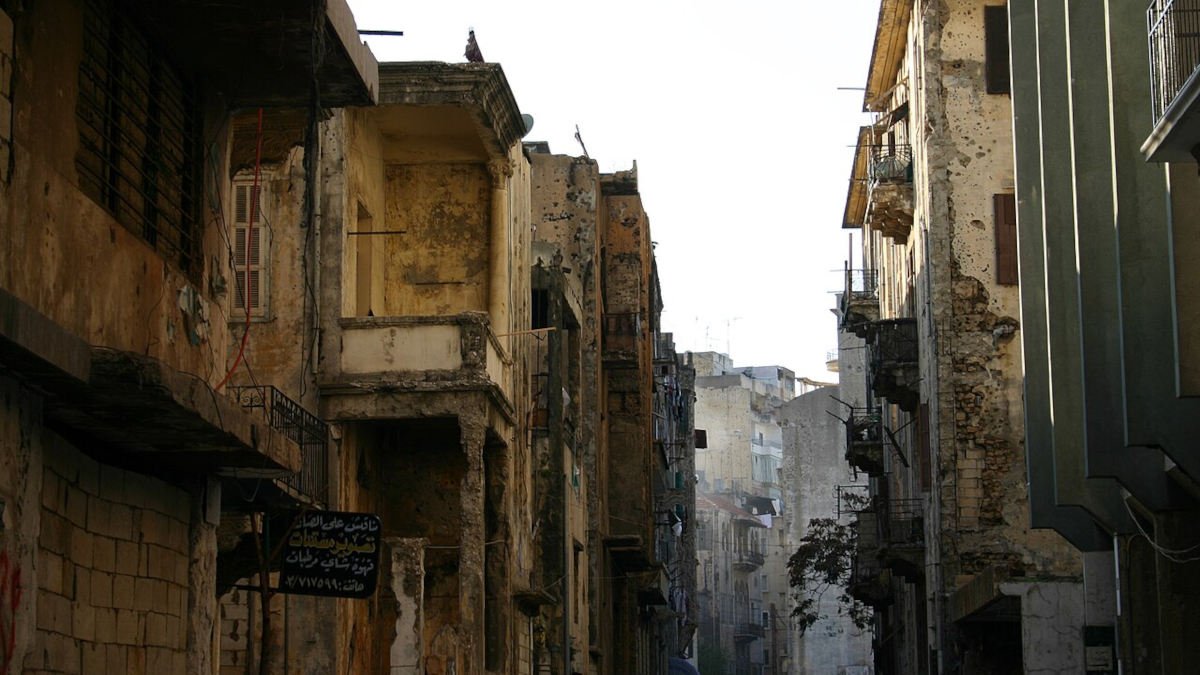
It was bad. The shells we had cheered had fallen here every night for a month, shattering windows and smashing holes through roofs. With one block, they had ripped away the entire façade. Curiously, the floors were still there, and the patterned, old-fashioned wallpaper, and the furniture, little chairs and tables. But no people. It was like looking at a real-life doll’s house.
It was bad, yet somehow it could have been worse. A few buildings were destroyed, but many more were simply damaged. A gash in the wall, plaster torn away, glass splintered, a machine-gun etching in concrete or stucco. Ugly, but not deadly wounds. The violence was inhuman, but mainly in the sense that there was nothing to indicate human involvement. No blood, no corpses, no tortured limbs or bones, no evidence of the horrors that my new journalist friends had described in the newspapers or on the radio every day. Human suffering on this scale would have moved me to tears; for bricks and mortar I could feel nothing more than polite regret. There was no sign of life, but equally no sign of death. It could have been a visit to a condemned area, where demolition had just begun.
— Can you feel it now?
— I suppose so.
— Do you want to stop and have a look around — dig for bodies maybe?
— Not particularly.
— Roll down the window.
The stench that filled the car was the dry dust of fallen masonry, mixed with mouldering garbage and excrement, burnt rubber.
Lawrence turned into a narrow street and stopped. In front of us, on the left, a house was pocked with bullet-holes, although the surrounding buildings were relatively unscathed. At ground-level the little local shops were shuttered with sheets of corrugated iron. Every one had been sprayed with an Arabic slogan in red or black paint; several were twisted and buckled inwards, although the padlocks seemed to have kept out the looters. The higher floors shut out the sun and the air, bringing an early twilight while the strip of sky above remained blue. Street cats, all ribs and haunches, crouched and stared at the intruders, then got on with the business of scavenging, sniffing at the rotting heaps on the pavement. Surely somewhere, someone was cooking. The stink got to me, and for an instant I wanted to vomit.
Lawrence was waiting for the place to make its impact.
— Not very nice, is it?
— Is anyone living here?
— One or two families, maybe. Most of them will have gone to live with relatives by now. It’s pretty dangerous in these parts. You see the place with the bullet-holes?
— That one?
— Right. Well that’s a favourite target for the neighbourhood sniper. He sits at the top of a building over there, a block away, and he’s got a direct line of fire, between the houses there, onto anyone who goes past.
— You mean he shoots anyone — just passers-by?
— You’ve got it.
— Why?
— Because it’s fun. Target practice.
— But not just at anyone?
— Haven’t you ever been to a shooting-range? Don’t you have that back at home? Or hunting? I thought hunting was supposed to be the sport of kings in Merrie England.
— Christ, Lawrence, not hunting people!
— Why not? It’s the ultimate thrill. Live targets and sitting ducks.
— But how do they know the people aren’t on their side?
— Because nobody’s on their side. They’re not in it for causes. They just do it for the hell of it. They’re all over the city. Are you ready?
— You’re not driving past there?
— Course I am. Poor guy — he must be bored out of his mind with nobody around.
He would be firing from my side. I wanted to throw myself on the floor. But I couldn’t, not in front of Lawrence.
— Keep your head down.
It was down. He revved hard and suddenly released the clutch. We lurched forward and stalled.
— Sorry. Let’s try that again.
Sweat streaming down my back. The engine roared. We rocketed past.
We were both alive. Nothing hit us.
Lawrence slowed to a crawl, and stopped.
— Where to now?
— Home.
— You don’t want to see any more?
— No. This place gives me the creeps.
I didn’t want to look out of the windows any more. If I was going to be shot, I didn’t want to see the trigger being pulled. Let it just happen.
I watched Lawrence. He was in enormously good humour. His jaw was clenched in a grim self-satisfied smile, and he was humming something without shape or meaning. He drove on slowly, composed, drumming his fingers lightly on the wheel, but with a sightseer’s eye scanning every doorway and window, darting from roadside to rooftop, in search of novelty or interest. I decided it was much more than a show of bravado, much more desperate, much more deadly. Lawrence cheerfully and diligently sought opportunities to gamble with life, his own and others’. He was either the most daring friend I’d ever had, or the most demented.
— Are you often in this area, working?
— Hmm? … No, it’s the first time.
— You mean you’ve never been here before?
— Not since the fighting started. They sealed it all off.
— Then how did you know about the sniper?
— Elementary, my dear Watson. You simply have to use your eyes, like a good Boy Scout. The bullet-marks, the gap between the buildings …
— But you didn’t know he was up there?
— I deduced it.
— You bastard!
— You toad. The Anderson tests are meant …
— Damn your shitty tests.
— Richard, you passed! Again!
This is an extract from my novel ‘The Foreign Aide’, a psychological thriller set in civil war era Lebanon, telling a story that’s just as relevant today.
The book is scheduled for publication on June 9th, 2026, but you can read the first eight chapters here. Then if you’d like to be a reviewer, you can order a digital copy of the whole book right now … details are on the same chapter listing page.
And if you’d also like to find out more about the background to the novel, I’m telling my own story on my Substack channel, free to all readers.