London – 1971
It wasn’t that I’d set my heart on becoming a teacher. Or becoming anything really. I’d drifted through three years of university in London without giving a thought to what might come next. I’d chosen English Literature because that’s what I wanted to study, not because I was chasing a job.
It was a friend visiting from Canada just after I’d graduated, who suggested teaching English as a foreign language. Why not take a TEFL course? Teach adults. Travel the world. Have adventures. It sounded cool.
So I found a 9-week course taught at International House, right in the heart of London, in a converted theatre just off Piccadilly Circus. If I completed the training successfully, I’d get a proper teaching diploma — and IH had affiliate schools in countries all over the world.
May 1974
Two years on, and I was loving my job, now employed by IH, and still working in the London school. The classrooms were unpretentious — you might say scruffy — just large enough to cram in 16 chairs with arm-rests and a teacher. But that added to the atmosphere of the place, friendly, cosy, and truly cosmopolitan with young adult students from all over the world — notably Japan, Spain, Italy, South America. The mixture of nationalities meant that English was the only common language, studied in the classroom then used in the coffee bar as we built cross-cultural friendships.
And this job that I’d chanced upon was beginning to take shape as a genuine career. I was now training other teachers, not on the full 9-week programme I’d taken, but an abbreviated 4-week course. One afternoon the Director of the school called me into his office for a chat.
— You’re doing really well, but have you thought about teaching abroad, just to widen your experience?
— Yes, that’s one of the reasons I started here. D’you have anywhere in mind for me?
— Well, one of our schools in Spain has asked us for a teacher trainer. In Granada.
— Granada! That sounds exciting.
— But …
— There’s a but?
— Maybe. I’ve met the guy who runs the school. He’s … how shall I put this? … he’s a big Franco supporter.
— A Franco supporter?
— A Fascist.
At the time, General Franco was still in power in Spain, an old man now. If you’d asked me back then to define Fascism, I wouldn’t really have known where to start, but I knew it was a Bad Thing. At school I’d learnt a bit about the Spanish Civil War from some of my literary heroes, Orwell and the poets Auden and Spender. They were supporters of the left-leaning Republican government against the rebel Nationalists, headed by Franco and supported by Germany under Hitler and Italy under Mussolini. Stephen Spender had actually been my personal tutor in my final year at college. How could I tell him I’d joined the Fascists?
— No. I’ve got a feeling that wouldn’t be the right place for me. Anywhere else?
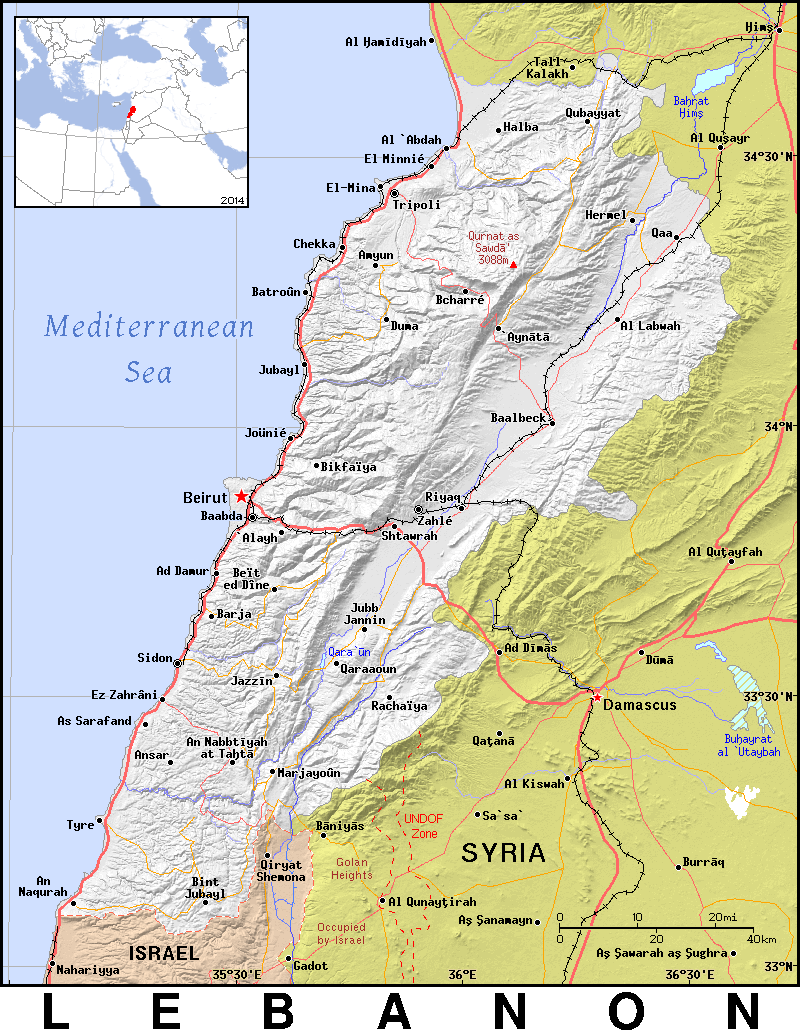
— How about Beirut then?
— Beirut? Well yes, France would be wonderful!
Maybe I was confusing Beirut with Bayreuth … although that’s a town in Germany. But the point was that in the early 1970s, I — and I suspect most other British people — had about as much idea where to find Beirut on a map as Timbuktu. As far as we were concerned, nothing of any note had ever happened there.
But that was soon going to change. And so was my whole world-view. Beirut was going to demonstrate how sheltered I’d been in my comfortable, cosmopolitan London world.
Four months later, my artist partner Loraine and I boarded a flight bound not for France, but for Lebanon. Where we would have a front-row seat in another civil war.
– – – – – – – – – – – –
This is the first in a series of background articles about my forthcoming novel ‘The Foreign Aide’, set in Beirut and due for publication in June 2026. Read the opening chapters of the book here. And then, if you’re enjoying the book, just follow the instructions on the chapter index page to sign up for a free review copy, available now.
This article was originally published on my Miles Postscript Substack.
The map of Lebanon is free software. Copyright © 2010, 2013 by Ian Macky.